Can I sue for police taser misuse?
Can I sue for police taser misuse?
Police taser misuse in the UK is becoming a subject of significant concern, with watchdog reports highlighting issues around disproportionate use. There has been growing concern about its improper use and the targeting of vulnerable groups.
A weapon that was once used only in the most extreme cases as a last resort is increasingly being used as a tool for compliance by pain. With the rollout of the Taser 10 in 2026, which features extended range and a multiple-probe firing system, the risk of greater taser misuse by police is reaching a crisis point. If you have ever had an encounter with police using a taser, which you feel was a disproportionate use of force in the situation, you may well be wondering can I sue the police for taser misuse?
At HNK Solicitors, we are experts in helping individuals hold the police accountable for acts of misconduct and have assisted thousands of people in claiming compensation against police forces across England and Wales, where their civil liberties have been breached by the police. In this article, we will explain when tasers can and cannot be used, the laws and statistics around police taser use, evidence around police disproportionately using tasers, and how our team of specialist action against the police solicitors can help you get compensation for police misconduct.
What is a police taser?
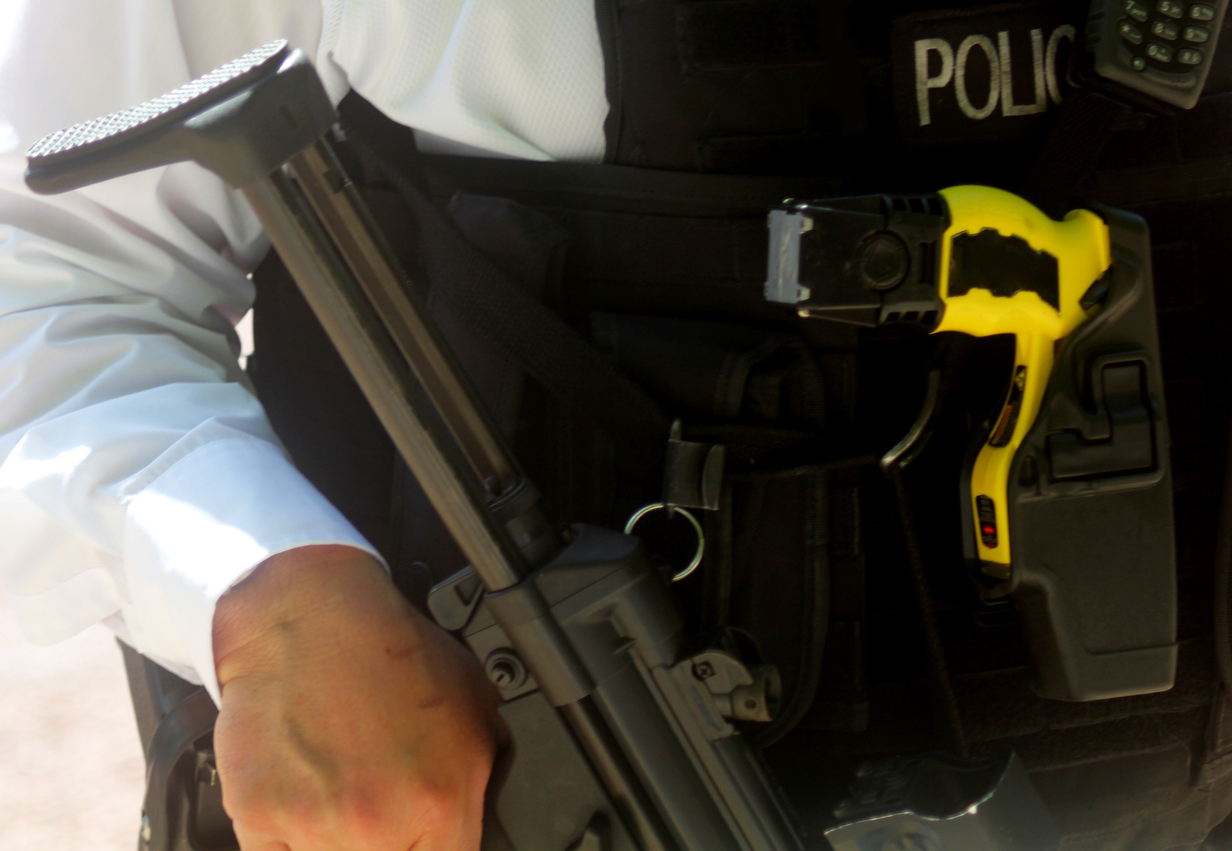
A police taser, also known as a Conducted Energy Device (CED), is a less lethal handheld electroshock weapon designed to temporarily incapacitate individuals by disrupting their neuromuscular system using high-voltage, low-amperage electrical pulses. They are supposed to be used to manage serious and dangerous situations from a distance and should only be used when it is considered reasonable and necessary.
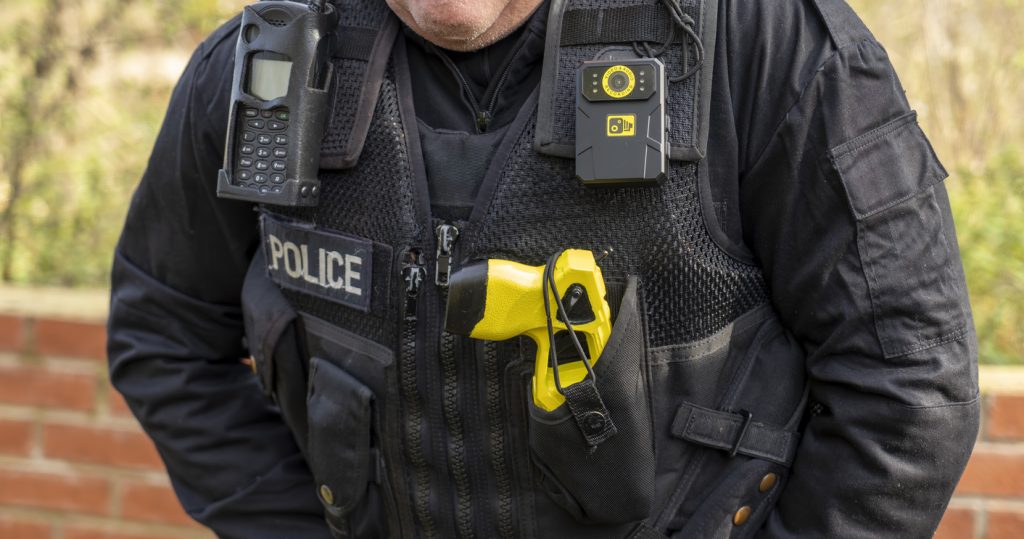
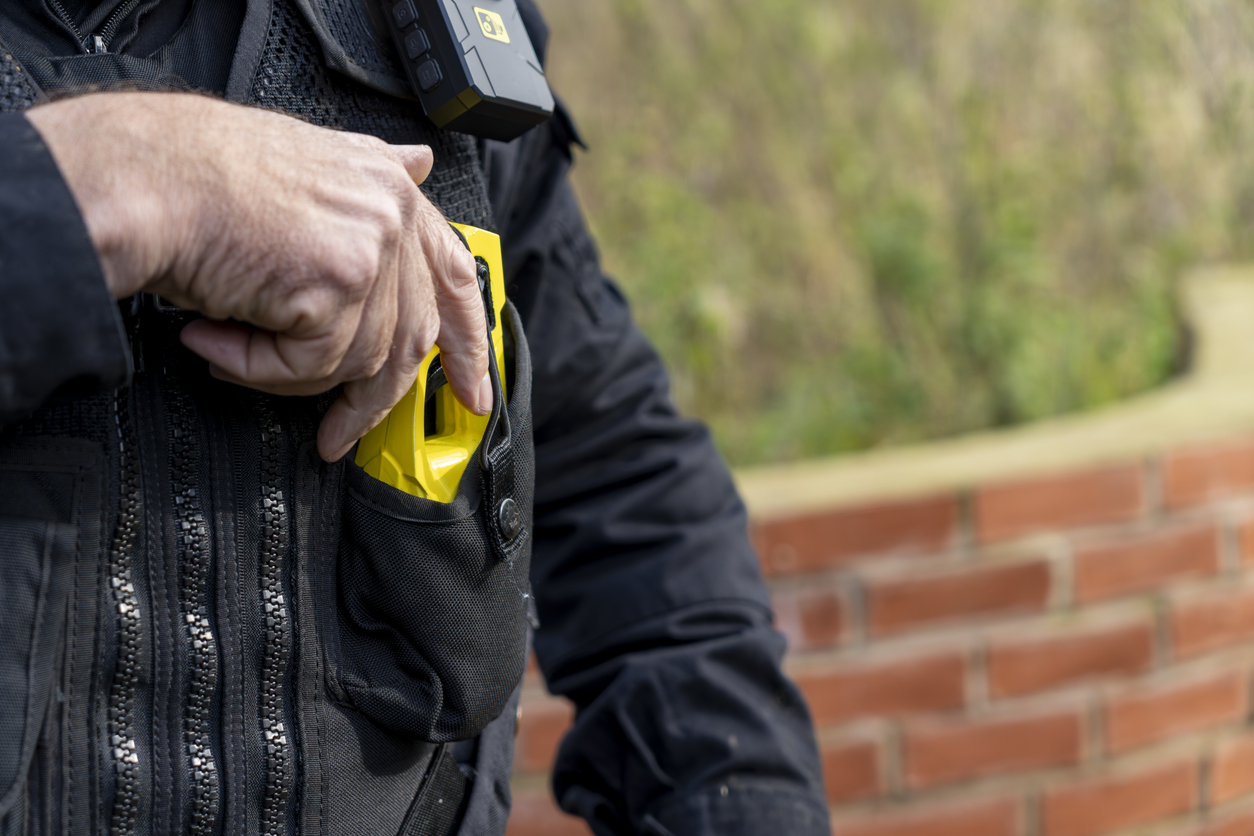
These devices were introduced in 2003 as a less lethal alternative to firearms to help police detain individuals who are violent or could cause harm. Police tasers are usually bright yellow, designed to stand out, so they are visible when an officer is carrying one. Not all officers carry tasers. Officers who carry and use tasers must be selected and undergo training, as well as compulsory refresher courses every year.
How do police tasers work?
A standard police taser works by firing two barbed probes attached to wires that deliver an electrical current into the body, which causes temporary loss of voluntary muscle control. The effects should last for a few seconds, which gives the officers enough time to restrain the person safely.
When can police use a taser?
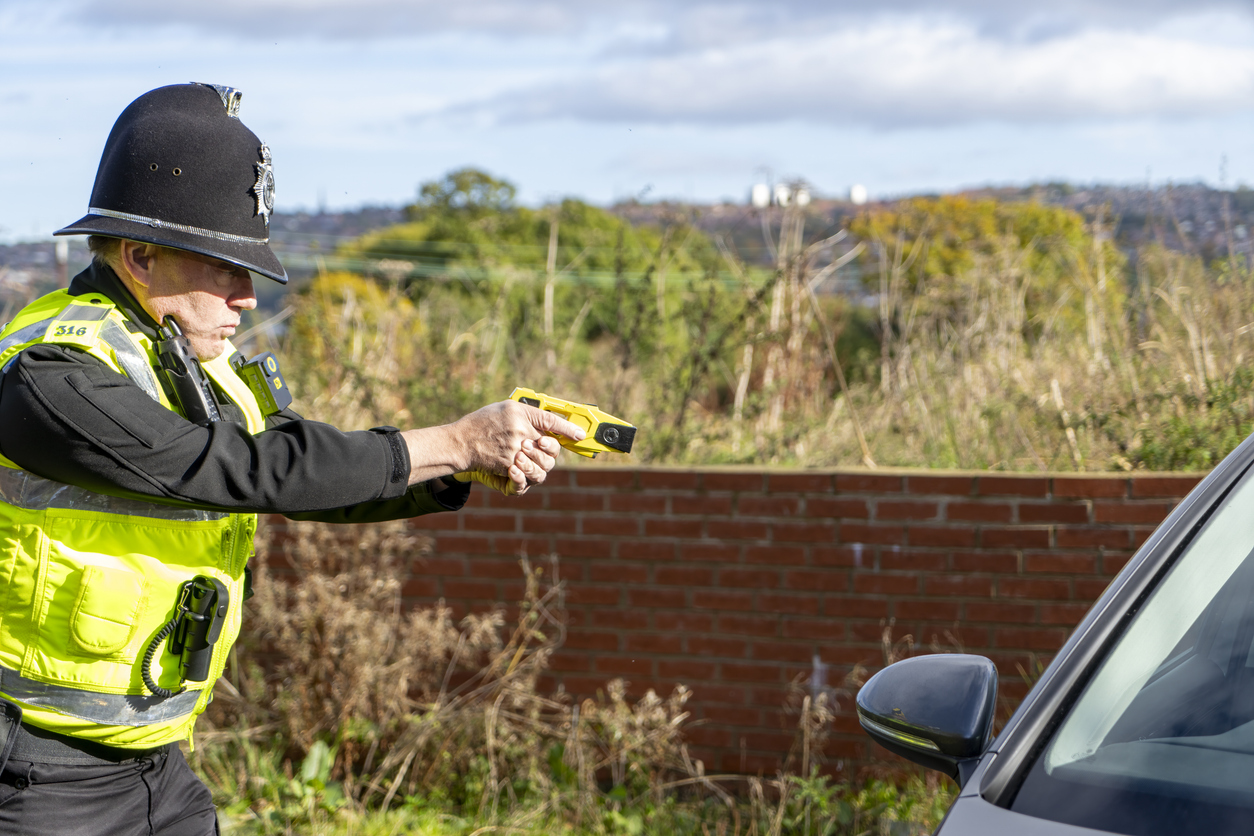
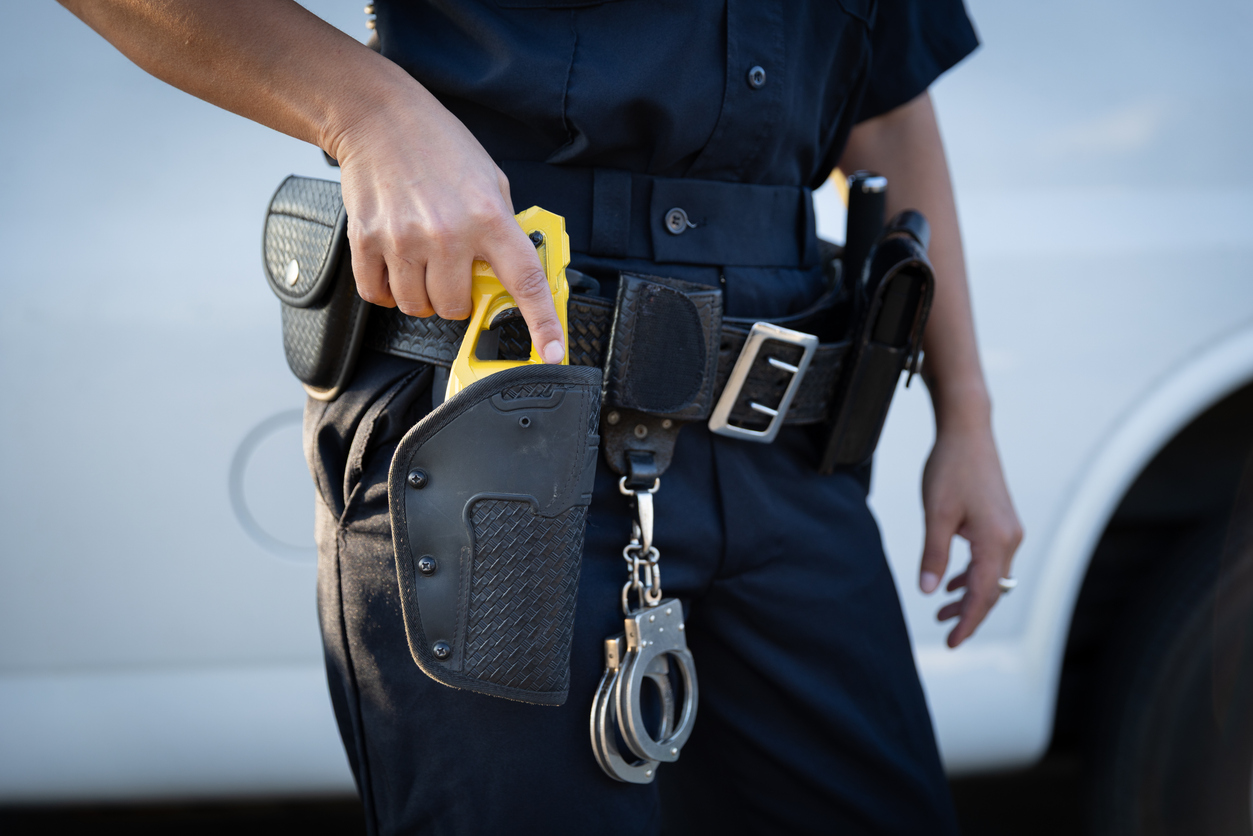
Police officers in England and Wales must follow strict guidance when deploying a Taser. Police officers can use a taser when facing serious, imminent violence or threats of violence, only when deemed legal, necessary and proportionate to protect themselves, the public or the individual. A taser is considered to be “used” even when not fired, so if an officer takes their taser from the holster, this is considered a use of force and must be justified.
As previously mentioned, only trained officers can use a taser, and they must decide on the most reasonable and necessary use of force in the circumstances. They are trained to continually assess a situation and use a level of force proportionate to achieve the objective. Each officer is accountable under the law for the amount of force they use and must be able to justify this.
The process for using a taser:
Each individual police force is responsible for selecting and training officers to use a taser. The College of Policing set the standards for Taser training. If possible, an officer must give “an oral and visual warning”, which involves shouting “Taser, Taser” and showing they have one when they intend to use their taser.
Tasers can also give a warning crackle, which shows the flashing of the charge, and a target light that shows where the taser is aiming. Just because a taser is drawn, it does not mean it needs to be fired. The threat of using a taser on an individual may be enough to de-escalate the situation, and therefore, the officer may not find it necessary to fire it. However, as mentioned, even just pulling out your taser is still considered a use of force.
New Taser 10 rollout
The recent introduction of a new 10-shot taser model, known as Taser 10, has raised fresh concerns around increased misuse and injuries. The Taser 10 features longer barbs and allows for multiple discharges, which could result in serious harm if not managed and used correctly.
The College of Policing published the New Taser 10 guidance and training in late 2025, with updated rules and training for each force that will be using the new Taser 10 model. They state that:
“Officers will only deploy a Taser when necessary, proportionate and reasonable to do so – upholding the core principles of policing in England and Wales and maintaining public confidence in how police use force.”
As of 2026, police forces around England and Wales have begun to roll out the new Taser 10 model. This model has a number of updated features which people are rightly concerned about:
- Extended range: The Taser 10 can fire from as far back as 10 metres, double the previous Taser models’ range. Police argue this gives them more time and space to assess the situation. It does raise the risk of hitting bystanders more easily or not properly realising the necessity of force needed from such a distance.
- Increased firing capacity: The previous Tasers fired just two probes; the Taser 10 features 10 single probes.
- Longer, sharper probes: They are significantly longer barbed spikes, fired with more force, that are designed to penetrate heavy clothing.
Amnesty International have raised its concerns around the introduction of these new tasers, stating that they carry a new set of risks, with the potential for serious unintended injuries and misuse, against a backdrop of police disproportionally using them and having poor accountability.
Oliver Feeley-Sprague, Amnesty International UK’s policing expert and a member of the independent advisory group to the National Police Chiefs’ Council lead on Tasers, said:
“Calling this a ‘safer’ Taser is misleading. A weapon that can fire ten times carries a real risk of overuse and serious injury, yet even the independent advisory group hasn’t been allowed to see the safety evidence.”
“And with fresh BBC footage showing officers misusing force and making racist and misogynistic remarks, the idea of rolling out a 10-shot Taser without first strengthening the safeguards around its use is profoundly alarming.”
“The much longer, faster-firing barbs raise the possibility of serious unintended injuries, with children at particular risk, including from facial or eye injuries.”
“The police already have a disturbing record of misusing Tasers, disproportionately targeting people from minority ethnic communities and those in mental health crisis. Official figures show Black people are around five times more likely to be Tasered than white people.”
Disproportionate use of tasers by police
It has long been reported that police disproportionately target certain groups in all areas of policing, including with the use of Tasers. Home Office statistics for 2019/2020 found that Black people were eight times more likely than White people to experience a Taser being drawn on them or discharged.
As a result of these statistics, the National Police Chief’s Council Lead for Less Lethal Weapons and the College of Policing announced an Independent Review into Disproportionate Effects of Use of Taser, which subsequently found that it is driven primarily by a combination of structural and institutional racism.
The Independent Office for Police Conduct (IOPC) also published a report reviewing cases involving the use of Tasers between 2015 and 2020. They found that of the 101 cases they reviewed, just under a third of people who had a Taser discharged on them were subjected to prolonged discharges. Mental health problems of acute behavioural disturbance, where common features in cases that there were discharges of 20 seconds or longer.
They also raised concerns around the use of Tasers on children/young people due to potentially increased physical and psychological risks associated with Taser use on children. According to Home Office data for 2019/2020, around 2800 Taser incidents involved children.
Why understanding Taser law matters
Although Tasers are classed as less-lethal weapons, their use can still have serious physical and psychological effects, particularly if used incorrectly or excessively. Serious risks include sudden cardiac arrest, effects on the heart, circulation and respiratory systems, and in some cases, individuals have been left paralysed after being tasered by police.
Understanding what a police Taser is and how it should be used is important if you believe:
- The force used against you was unnecessary.
- The situation did not justify Taser deployment.
- Proper procedures were not followed.
In these circumstances, the use of a Taser may form part of a police misconduct complaint or legal claim.
When does police taser use become unlawful or excessive?
The use of a Taser by police is not automatically unlawful; however, it must always meet strict legal standards. If those standards are not met, Taser use can amount to excessive force, giving rise to a police complaint or a potential compensation claim.
The legal standard: Reasonable, Necessary and Proportionate
Under UK law, any use of force by police must be:
- Reasonable in the circumstances
- Necessary to achieve a lawful objective
- Proportionate to the level of threat faced
These principles come from laws such as:
- The Criminal Law Act 1967 (use of reasonable force)
- Common law self-defence principles
- The Human Rights Act 1998, particularly the right not to be subjected to inhuman or degrading treatment
If Taser use goes beyond what is reasonably required, it may be considered unlawful.
Examples of potentially unlawful taser use
Taser deployment may be excessive or unlawful in situations such as:
1. No immediate threat of harm
If a person is not posing a genuine risk to officers or the public, using a Taser may be unjustified.
2. Use on a restrained or compliant individual
Deploying a Taser on someone who is already one of the following is often difficult to justify and may amount to excessive force:
- Handcuffed
- Restrained
- Not resisting
3. Disproportionate response
Using a Taser in response to verbal confrontation only or minor, non-violent offences may be considered disproportionate.
4. Repeated or prolonged Use
Multiple discharges or prolonged exposure can increase the risk of harm and may be unlawful if not strictly necessary.
5. Failure to follow proper procedure
Officers are trained to follow specific protocols, including:
- Giving a clear warning where possible
- Considering alternative options
- Assessing vulnerability (e.g. mental health, age, medical condition)
Failure to follow these procedures can indicate misuse.
Can I sue the police for Taser misuse?
You may be able to bring a claim against the police if the Taser use resulted in:
- Physical injuries
- Psychological harm
- Unlawful arrest or detention
- Breaches of your human rights
Each case depends on its specific facts, but where force is excessive, victims may be entitled to compensation. If police have ever pulled a Taser on you, whether it was fired or not, and you feel it was excessive due to the situation, you may be eligible to make a claim. Consult a specialist action against the police solicitor to find out if you can claim compensation.
What evidence do I need to prove Taser misuse?
Determining whether force was excessive often depends on evidence such as:
- Body-worn camera footage
- Custody records
- Medical reports
- Witness statements
- Use of force forms
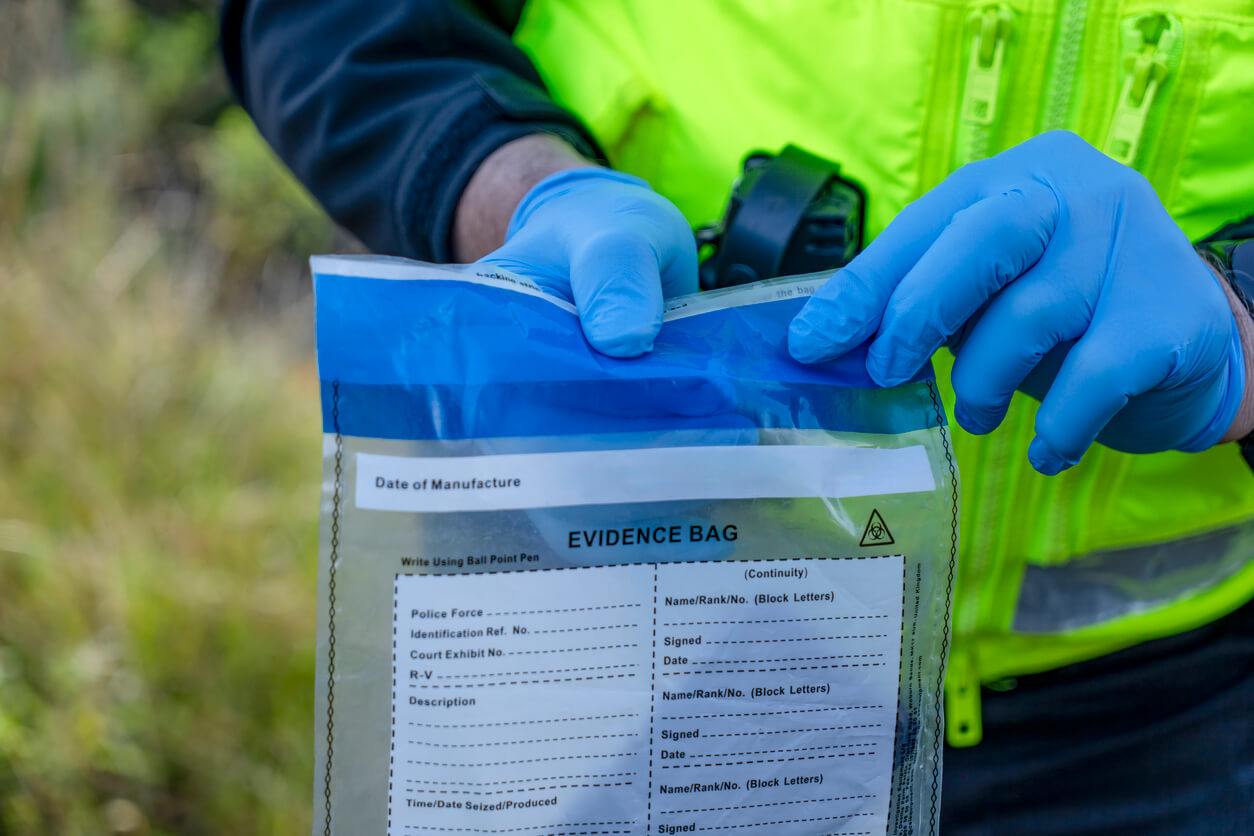
This evidence is critical in establishing whether the use of a Taser was justified. If you consult a specialist action against the police solicitor, they will be able to quickly gather the evidence needed to support your claim. This is especially important where body-worn camera footage is involved, as sometimes police only retain the footage for 28-30 days.
For more information about how to make a claim against the police, read our complete guide.
HNK Solicitors can help with your police claim
Understanding when Taser use crosses the line from lawful force to misconduct is key, especially if you are considering taking action against the police. HNK Solicitors’ specialist civil claims against the police understand the relevant laws and regulations around police taser use and excessive force, and will be able to provide advice on whether you have a claim, as well as take on the claim for you.
We offer free, no-obligation consultations and can even take on claims on a no-win, no-fee basis. We’ve helped many clients successfully claim thousands in compensation after suffering police misconduct. Get in touch with our team today on 0151 668 0812, enquiries@hnksolicitors.com or by filling in our online claim form.
Frequently asked questions
Can police use a Taser if you are not resisting arrest?
Not usually. Police officers must only use force that is reasonable, necessary and proportionate to the circumstances. If you are complying with officers and are not posing an immediate threat to anyone’s safety, using a Taser may be considered excessive and could amount to unlawful use of force. Each case will depend on its individual facts.
Can police point a Taser at you without firing it?
Yes. However, drawing or aiming a Taser is still legally classed as a use of force. Officers must therefore be able to justify why it was necessary and proportionate, even if the Taser was never discharged.
Is it illegal for police to use a Taser on someone with mental health issues?
Not automatically. However, officers are trained to consider a person’s vulnerability, including any known mental health condition, before using force. If they fail to do so or use a Taser where it was not justified, this could form part of a complaint or compensation claim.
Can I claim compensation if I wasn’t physically injured by a police Taser?
Potentially, yes. A compensation claim may still be possible if you suffered psychological harm, were subjected to unlawful or excessive force, or your human rights were breached, even if you did not sustain significant physical injuries.
How long do I have to make a claim against the police for Taser misuse?
Time limits depend on the type of legal claim being made. In many civil claims, you may have up to six years to begin proceedings, although Human Rights Act claims generally have a one-year time limit. It’s important to seek legal advice as soon as possible, as crucial evidence such as body-worn camera footage may only be retained for around 28 to 30 days.
What should I do if I believe the police used a Taser unlawfully?
If you believe a police officer used a Taser excessively or without justification, try to seek medical attention if needed, keep records of your injuries, obtain witness details, and contact a specialist solicitor as soon as possible. Acting quickly can help preserve important evidence, including CCTV and body-worn camera footage.
Can body-worn camera footage be used as evidence?
Yes. Body-worn video is often one of the most important pieces of evidence in claims involving police Taser misuse. It can help establish what happened before, during and after the incident and whether the force used was lawful and proportionate.
Does every police officer carry a Taser?
No. Only specially selected officers who have completed approved Taser training are authorised to carry and use one. These officers must also complete regular refresher training and are personally accountable for every use of force.
What is the difference between lawful and excessive use of a Taser?
Lawful Taser use must always be reasonable, necessary and proportionate to the threat faced. If an officer uses a Taser when there is no immediate danger, on someone who is already restrained, or without following the correct procedures, the force may be considered excessive or unlawful.