Can police handcuff you without arresting you in England and Wales?
Can police handcuff you without arresting you in England and Wales?
In England and Wales, the police can handcuff you without making a formal arrest, but only when strictly justified, proportionate and necessary. Handcuffing an individual is classed as use of force by police, so they must comply by strict guidelines and set powers in place to ensure handcuffing you in the situation is lawful.
In this article, we will explain when police can handcuff you, in what situations police can handcuff you without arresting you and when this may be classed as an unlawful use of force. Understanding your rights when interacting with police is so important. The police are there to do a public service and ensure laws are upheld, and as such, they have certain powers granted to them to help them enforce the law, maintain public order and investigate crimes.
Sometimes, some officers can abuse these powers, which is unlawful and directly impacts your rights. You do not have to allow this abuse of power to go unaddressed. If you have been treated unlawfully by police, you could be entitled to make a claim against the police to claim damages for any suffering.

Can police handcuff you without arresting you?
Yes. The police can legally handcuff you without making a formal arrest. As mentioned, this is classed as a use of force and must be strictly justified, and only used in specific, temporary scenarios such as:
- Stop and search: officers can use reasonable force, including handcuffs, during a lawful stop and search if they believe it is necessary and proportionate to prevent a person from escaping or posing a threat to themselves or others around them.
- Safety and threat prevention: Police can handcuff someone to stop them from harming themselves, officers or members of the public.
- Brief detention: Handcuffs can be used to maintain control while an officer conducts urgent investigations or moves someone to a safer location.
The use of handcuffs is a form of force, which is governed by Section 117 of The Police and Criminal Evidence Act (PACE) 1984 and The Criminal Law Act 1967. Any use of force by police must be proportionate and strictly necessary under the circumstances, but officers do not have to arrest you before using force. If an officer does handcuff you, they must be able to justify why they did so, and also justify the length of time you were handcuffed for.
If you are handcuffed, the officer should explain why. If handcuffs are on too tight, hurting you, or causing injury, tell the officer immediately. Remember, being handcuffed does not necessarily mean you are under arrest.
What to do if you are handcuffed by police
If you are ever in the situation where you are handcuffed by police, you should try to remain calm and do the following:
- Ask the officer why you are being handcuffed.
- Remain calm and do not resist. If you resist, this may give police grounds for arrest and additional force.
- If when the handcuffs are on they are too tight, causing injury or pain, tell the officer immediately.
- Ask for the officer to note the handcuffing in their record of the encounter.
- If you believe the force was excessive, ask for the officer’s details (such as their name, badge number, and station they work at) so you can later complain to the IPOC if you wish to make a complaint.

When can police legally use handcuffs?
In England and Wales, police can legally use handcuffs to detain someone when lawful, necessary and proportionate to the specific situation. Officers do not need to handcuff every arrested individual. When arresting someone, officers should base their decision to use handcuffs on specific reasons:
- To prevent escape
- To protect the safety of the individual, officers and the public
- To prevent a breach of the peace
Handcuffs cannot be applied automatically just because an officer is arresting or detaining you. If an individual is calm, cooperative and compliant, using handcuffs could be considered unreasonable or disproportionate under the circumstances. Handcuffs must also be removed as soon as the justification for using them no longer applies, if a person remains in handcuffs longer than is proportionate and necessary, this could be classed as unreasonable force and unlawful.
Can police handcuff you during a stop and search?
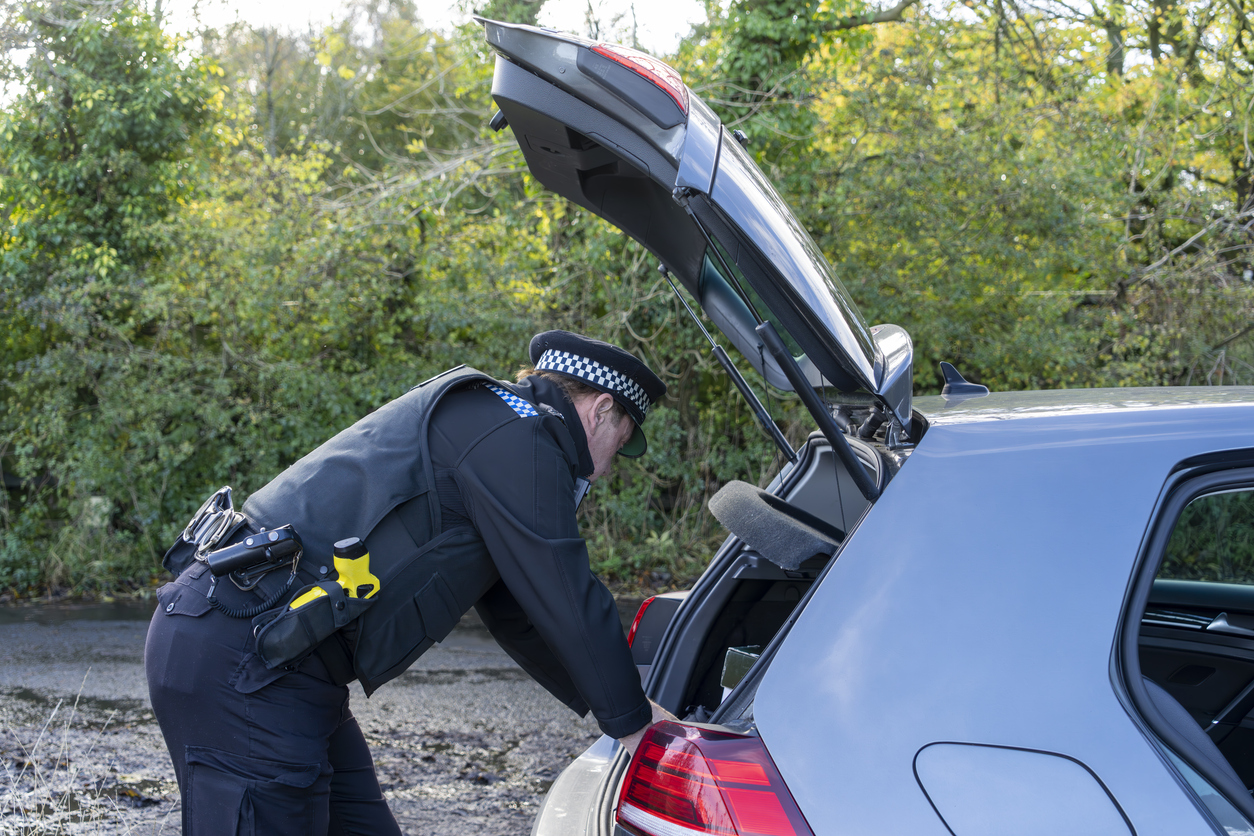
Yes, police can handcuff you during a stop and search, but only if deemed necessary, lawful, and proportionate to the situation. Officers cannot use handcuffs just out of routine, there must be a justifiable reason for them to do it, such as to stop you from trying to escape, prevent you from hurting yourself or someone else, or if you are acting aggressively.
The law requires officers to assess and justify the use of handcuffs on a case-by-case basis. It is important to remember that police can only stop and search you, or your vehicle, if they have “reasonable grounds” to suspect you are carrying illegal drugs, weapons, stolen property or something that could be used to commit a crime. You have rights during a stop and search too, to learn in more detail about your rights during a stop and search, read our blog on the subject.
Can police handcuff you during a voluntary police interview?
A voluntary police interview, is when an individual agrees to speak to police voluntarily, so you are not under arrest and are technically free to leave at any point. However, if you do decide to leave or run, the police may then establish “necessity” to detain you, if they think they need to prevent you from fleeing, hiding or destroying evidence, or committing further offences). In this case, they may then arrest you, in which case they can legally handcuff you.
Does being handcuffed mean you have been arrested?
No, being handcuffed does not automatically mean that you have been arrested. If you are handcuffed, this means you have been “detained” and are not free to leave, but you are not necessarily under arrest. As mentioned above, officers can handcuff you for several reasons, such as to ensure safety or prevent escape during a temporary detention.
If you are handcuffed and placed under arrest, the police must tell you that you are under arrest, read you the police caution, state for what offence they are arresting you for and explain that you are not free to leave. Police must be clear that they are placing you under arrest and then uphold your rights while in police custody.

Can police handcuff children?
Yes. There is no minimum age that prevents police from using handcuffs, but the same legal principles apply as they do for adults. Officers must consider whether using handcuffs is necessary, reasonable and proportionate in the circumstances, taking into account the child’s age, behaviour and any potential risks. Handcuffing a child should never be an automatic response.
While police can handcuff children, but it is generally only used in exceptional circumstances. As it is classified as a use of force, it is only used when absolutely necessary, like to stop a child harming themselves or someone else. Police should only ever handcuff a child as a last resort and for the shortest possible time.
What if the handcuffs were too tight or unnecessary?
If you are handcuffed and they are too tight, you should clearly and calmly tell the officer. Explain how it is hurting you, whether you’re feeling numbness or a lack of circulation so they can adjust the handcuffs accordingly. Ask them if they can loosen the handcuffs and ensure that your request is recorded so it is documented on the record. This will help if you face injury or the encounter is unlawful and you wish to complain or raise a claim against the police.
If the handcuffs have cause you injury such as bruising, cuts or broken skin, or nerve damage, ask for medical attention and document the injuries. Having a record and photograph evidence of any injury caused by handcuffs, or any other use of force by police, can help if you later wish to make a claim for unlawful behaviour.
If you feel that being handcuffed by police in the circumstances was unnecessary, you can ask the officer to explain why they feel the handcuffs are necessary in that moment and what the specific risk is. If you become calm and compliant and do not pose a risk, you can request the handcuffs to be removed. If they are not, then this could be classed as unnecessary and excessive use of force or unlawful detainment.
If the police have caused injury by handcuffing you or handcuffed you without good reason, you have the right to make a complaint to the police, this can be done via the IOPC or directly to the specific police force you had the encounter with. A police complaint will formally record allegations against police and look into the professional standards. It can lead to disciplinary action, force procedure reviews or criminal referrals. However, it will not result in any form of compensation for the victim. To gain compensation, you will have to make a civil action against the police claim.
Can you make a claim against the police?
Yes, you can make a claim against the police if you have been unlawfully handcuffed, or police have used excessive force and cannot justify it was necessary or proportionate in the circumstances. You have rights and the it is the police’s duty to uphold these and not abuse their powers, and if they do, you have the right to make a claim.
When claiming against the police, you can claim for injury, both physical and psychological, damages, financial losses, and for your loss of liberty. While compensation cannot take back what happened to you, or your suffering, it can go some way in helping you to move on from the incident and compensate for any losses.
If you do want to make a claim, it is best to do so as soon as possible. Strict time limits apply on how long you have to make a claim based on the incident. Typically you have:
- 1 year to make a claim for a human rights breach
- 3 years for a personal injury or assault
- Up to 6 years for wrongful arrest or false imprisonment
- 6 months for discrimination under the Equality Act
The sooner the start your claim, the better the chances you have of obtaining all relevant information and evidence needed to support it. This can include things such as bodycam footage, police records and medical records.
It is also a good idea to instruct a specialist civil action against the police solicitor, like HNK Solicitors, to help you when claiming against the police. This will give you the best possible chance of a successful claim.
Solicitor commentary:
“People often assume that no arrest means no power to handcuff. However, you can be handcuffed even if you have not been arrested. Equally, the existence of a lawful detention does not give police officers an automatic right to apply handcuffs. Whether the use of handcuffs was reasonable will always turn on the facts of the individual case and the circumstances surrounding it.”
Vivien Lee, Associate Solicitor and Deputy Head of Actions Against the Police Department.

HNK Solicitors can help if you have been unlawfully handcuffed
If you have been handcuffed by police without justification, we can help you. If police handcuffed you for no good reason, whether you were injured or not in the process, you could be eligible to claim compensation.
Our dedicated action against the police solicitors can take on your claim, gathering all evidence needed to support it, and dealing with communications with police on your behalf. We have helped many clients successfully gain compensation from police after suffering acts of misconduct, excessive force or abuse of power.
Recently, we helped one client obtain £34,000 in damages against Avon and Somerset Police for assault and battery, personal injury and aggravated damages, after they used excessive force when arresting him.
Our team could also take on your claim on a no-win, no-fee basis, which means you don’t have to pay a penny upfront to start your claim. Arrange your free consultation today and let us fight to get you the compensation you deserve.
Call on 0151 668 0809, email enquiries@hnksolicitors.com or fill in our online claim form.
Frequently asked questions
Can police handcuff you without telling you why?
In some situations, police officers may need to use handcuffs before they’ve had the chance to fully explain what’s happening, particularly if they believe there is an immediate risk to themselves, the public or the person involved. Once it is safe to do so, they should explain why force was used and, if you are being arrested, tell you that you are under arrest and the reason for it. If you are handcuffed but not arrested, officers should still be able to justify why they considered handcuffs necessary.
Can police handcuff you during a stop and search?
Yes, but it is not something that should happen as a matter of routine. During a stop and search, officers can use handcuffs if they reasonably believe they are needed, for example to prevent someone from becoming violent, escaping or interfering with the search. The decision should be based on the specific circumstances rather than a blanket policy, and officers should be able to explain why handcuffs were necessary.
Can police handcuff you if you’re cooperating?
Simply cooperating with the police does not automatically mean handcuffs cannot be used. Officers may still decide they are necessary if they believe there is a genuine risk to safety or another lawful reason for using them. However, if someone is calm, compliant and presents no obvious risk, it may be more difficult for the use of handcuffs to be justified. Every situation depends on its own facts.
Does being handcuffed mean you’re under arrest?
No. Although people often associate handcuffs with arrest, the two are not the same. Police can use handcuffs in some situations without making an arrest, provided they have lawful grounds for doing so. If you are arrested, an officer should tell you that you are under arrest, explain why and inform you of your legal rights.
Can you sue the police for excessive force?
If you believe the police used more force than was reasonably necessary, you may be able to bring a legal claim. Whether a claim is successful will depend on the facts of the case, including why force was used, whether it was proportionate and whether you suffered injury or other harm as a result. If you think officers acted unlawfully, it’s sensible to seek legal advice as soon as possible so your circumstances can be properly assessed.